Ecommerce SEO Content Pipeline Using n8n and Google Search Console
A data-driven SEO automation system built for ecommerce. It analyzes Google Search Console data, scores product-level keyword opportunities, and generates structured WordPress drafts with human oversight.
Ecommerce SEO Content Pipeline
Overview
This project involved designing and implementing an automated SEO content system for an ecommerce business.
The goal was to reduce operational overhead, improve content prioritization, and create a structured decision process around what should be published and why.
The previous SEO approach focused on broad, site-wide keywords and a more holistic visibility strategy. While valuable, it lacked a systematic way to identify and prioritize product-level and intent-driven opportunities.
The new system introduced a data-driven intelligence loop that continuously analyzes search performance and generates high-priority content opportunities with human oversight at key decision points.
The Problem
- SEO content required approximately 8 to 10 hours per week
- Keyword research and prioritization were manual
- Content production was reactive rather than structured
- Opportunities from Google Search Console data were underutilized
- There was no formal scoring model to evaluate what should be created
The business needed a repeatable process that could reduce manual effort while improving strategic focus.
System Architecture
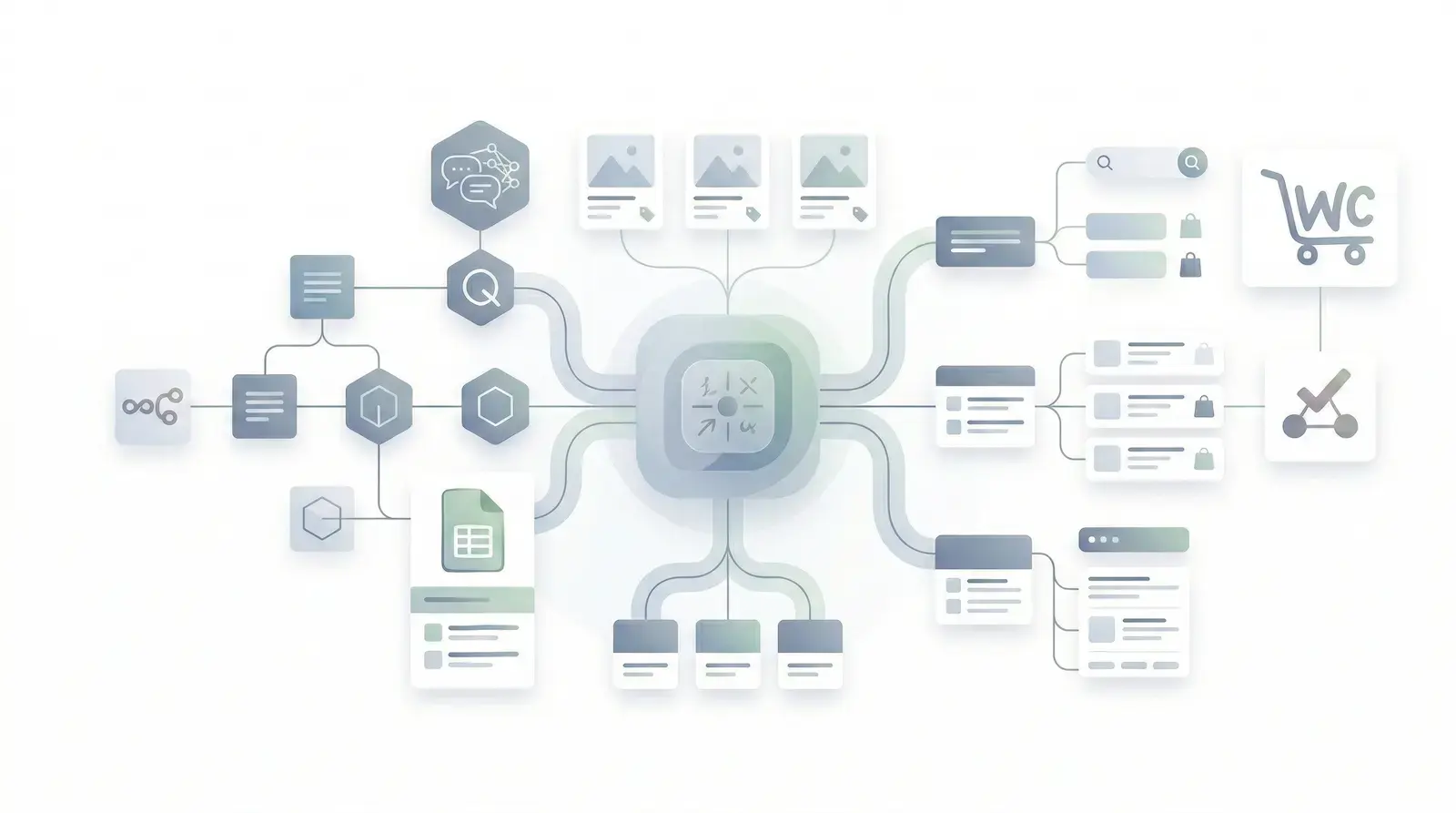
The solution was built as two connected automation workflows using n8n, integrated with Google Search Console, Perplexity, OpenAI, Google Sheets, Asana, and WordPress.
1. Intelligence & Opportunity Discovery Layer
This workflow runs periodically and performs the following:
- Pulls first-party performance data from Google Search Console
- Identifies low-ranking but high-impression queries
- Expands related long-tail opportunities using external search intelligence
- Evaluates keyword intent and commercial relevance
- Applies a scoring model based on intent, ranking position, and potential impact
- Filters out low-value topics through conditional logic
Only high-scoring opportunities move forward.
Instead of generating content blindly, the system prioritizes based on measurable signals.
Approved opportunities are stored in Google Sheets, which acts as a structured review and decision layer.
2. Content Production Workflow
Once an opportunity is approved, the second workflow:
- Generates title suggestions aligned with search intent
- Builds structured outlines informed by competitor analysis
- Drafts the full article
- Creates SEO metadata
- Generates supporting images
- Publishes to WordPress as a draft
Each draft is assigned as a task in Asana for review and approval.
Human oversight remains part of the process. The system reduces production time, but final publishing decisions are always manual.
Operational Integration
The system integrates directly into real business processes:
- Google Sheets serves as the memory and approval layer
- Asana manages task assignment and accountability
- WordPress remains the publishing environment
- All automation steps are traceable and auditable
The result is a structured content operating system embedded in day-to-day operations.
Measurable Outcomes
During the first period after deployment:
- Revenue increased by over 100 percent compared to the previous period
- Gross sales followed a similar growth pattern
- Weekly SEO workload was reduced from approximately 8 to 10 hours to under 1 hour
- Content prioritization shifted from broad keyword targeting to intent-driven, product-focused opportunities
Multiple factors influence revenue growth, but the implementation marked a clear before/after in both operational efficiency and content performance.
Technology Stack
- n8n
- Google Search Console API
- OpenAI
- Perplexity
- Google Sheets
- Asana
- WordPress
Summary
The client's SEO workload dropped from 8–10 hours weekly to under one hour, with better-prioritized output. The automation didn't mean more content — it meant knowing which content to make before spending time on it.
More Projects
Explore other projects in my portfolio